COMS W4181: Security I
Columbia University · Fall 2026 · Mon/Wed 4:10–5:25 PM · 702 Hamilton Hall
This is the introductory security course at Columbia. We cover threat models, cryptography, TLS and PKI, web security, TCP and DNS attacks, network defenses, and memory corruption, roughly in that order. The lecture decks are already online under Lecture materials. I am still revising them, so expect changes as the semester goes on.
Here is what we have this semester: lectures on Monday and Wednesday, two homework assignments, two midterms, a final exam, and a semester-long hacking competition that counts for 40% of the grade. In the competition you pick a real open-source program, plant a bug in it, and then hunt for the bugs your classmates planted. It is the most fun part of the course, and I think the part that teaches the most.
Meeting time corrected. We meet Mon/Wed 4:10–5:25 PM, 75 minutes. The 4:10–6:00 PM slot that was listed here earlier was wrong. If you put the old time in your calendar, please fix it.
Course at a glance
- Meeting time: Mon/Wed 4:10–5:25 PM
- Location: 702 Hamilton Hall
- Instructor: Zhuo Zhang, CSB 457
- Office hours: the TAs' hours are on a shared Google Calendar.
Teaching assistants
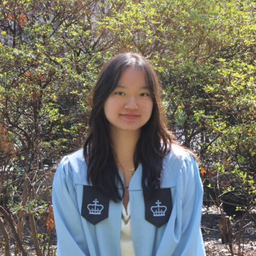 Annie Wang (@anniew03)
 Madalina Stoicov (@mmstoic)
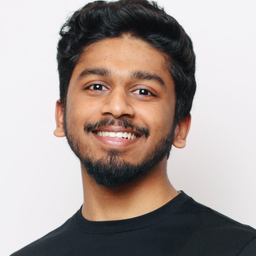 Nitish Ramaraj (@nitishramaraj)
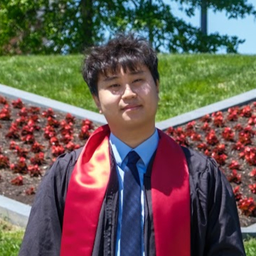 SeungHyun Sung (@ssung099)
Office hours are on the TA calendar. Add it to your own calendar and the slots show up there.
Why this course
- Security is mostly a way of thinking. The point of this course is to get you to think like an attacker, because that is the only reliable way to build something that holds up.
- We work on real programs. The competition uses real open-source projects with real test suites, not toy binaries written for a lab.
- The topics are the classics: threat models, crypto, TLS, the web, the network, memory corruption. Whatever you end up building later, you will keep running into them.
What we have this semester
- Lectures. Twice a week. The decks are under Lecture materials and will keep changing.
- Two homework assignments and two midterms. Each midterm has the same problems as its homework, with some numbers changed. Homework is due at 11:59 PM the day before its midterm (Tue Oct 6 and Tue Nov 10), with no late days.
- A final exam. Required.
- The hacking competition. Two rounds, each with a preparation phase and an attack phase. See the competition page.
- Extra credit. Attendance, in reverse, and a bug bounty. See Grading.
There are no formal prerequisites. You will have an easier time in the competition if you can read C, Rust, or Go and are comfortable with git. Note that you cannot get credit for both W4181 and W4180 or W4187.
Books, optional
There is no required textbook. The lectures and the competition are self-contained. If you want a book beside them, these two are the ones I would suggest:
- Network Security: Private Communication in a Public World, Charlie Kaufman, Radia Perlman, and Mike Speciner. The reference for the cryptography, PKI, and protocol lectures.
- Thinking Security: Stopping Next Year's Hackers, Steven M. Bellovin. About how to think about threats and defenses, which is what the first lecture and the competition are for.
Lecture materials
Every deck runs in the browser. The lecture index has all of them; the list below links to each one directly.
In a deck, the arrow keys advance, S opens the speaker notes, F is fullscreen, and Esc shows the overview.
- Introduction & threat models
- Cryptography
- SSL/TLS & PKI
- Web application security
- TCP & DNS security
- Network defenses
- Memory-corruption attacks
- Competition: Round 1 review
These will change. I publish the decks early so you can read ahead, but I revise them as we go. The schedule links to the version we used in class.
The hacking competition
The competition runs on ProgramBench, a benchmark of real open-source programs with test suites. There are two rounds. In each round you pick a program from the project list, inject a bug that crashes it, and send the TAs a proof of concept. Then everyone gets a few weeks to find the bugs the others injected. You earn points if nobody finds your bug, and for every bug you find in someone else's program.
Two things to do in the first two weeks. Come to the setup session on Wed Sep 16, and by Sun Sep 20 email the TAs (CC Zhuo) your GitHub handle and a password. The password is only ever shared with the TAs and me. You will use it to lock every proof of concept you submit.
The rules, the submission workflow, and the scoring are on the competition page. We will put up a separate leaderboard once the competition starts, refreshed every week or two, and right away whenever a bug gets found. One hint: everyone can run diff, so make your change bigger than the bug, up to the cap of 15% of the program's original lines of code, counted after formatting. Never by touching the build or test scripts, though: that disqualifies you for the round. Details on the competition page.
Grading
- Homework and midterms: 30%. Two units of 15%, one per homework and midterm pair. The midterm has exactly the same problems as the homework, with some numbers tweaked, so if you did the homework yourself the midterm will look familiar. Within a unit, the homework counts 20% and the midterm 80%.
- Final exam: 30%.
- Hacking competition: 40%. Round 1 counts 20% and Round 2 counts 80%, so the first round is mostly for learning how the game plays. The weighted total is curved before it goes into the course grade. After the curve, the class median sits at 85% of the competition points.
Overall course grades are curved, with the median at B+. Extra credit is added before the curve.
Extra credit
- Attendance, in reverse. Attendance is not required. But if fewer than one third of the class shows up to a lecture, everyone who is there gets one extra-credit point.
- Bug bounty. Find a real bug in any GitHub project with more than 1,000 stars, get it confirmed by the developers or maintainers, and you get one extra-credit point. Follow the project's security policy, and see the bug bounty leaderboard for reporting guidance and recognition. There may or may not be a cap on bug bounty points. If someone hits it, I will say so right away, so nobody keeps hunting for nothing.
Policies
- Late days, competition only. Submitting your modified program on time earns the full submission score. One day late keeps two thirds of it, two days late one third, and that is the limit. After that the pull request does not count, though you can still earn attack score in that round. There are no late days for the attack phase or the exams.
- Homework has no late days. It is due at 11:59 PM the day before its midterm: Tue Oct 6 for Homework 1, Tue Nov 10 for Homework 2. After that it is not accepted.
- Competition times come from the systems, not from emails. GitHub for when your pull request was opened, CourseWorks for when your attack PoC was submitted. The email about your pull request just tells the TAs where to look.
- Missed exams. We do not offer a make-up written exam. If you cannot attend a midterm or the final, you take an oral exam instead. For a midterm taken orally, the homework is not taken into consideration: the oral exam alone decides that unit.
- Integrity. Columbia's academic integrity policies apply. In the competition, the code you submit and every proof of concept must be your own. Sharing your competition password or a proof of concept with another student is a violation.
- Responsible disclosure. The bug bounty is for real bugs in real projects. Report through the project's own security process, do not go public before a fix, and do not test systems you are not authorized to test.
Schedule
Everything in one place: the 26 class meetings and the dates in between. Rows with a Class tag are meetings, Mon/Wed 4:10–5:25 PM in 702 Hamilton Hall. Anything that is not a plain lecture is coloured by type. I will fill in the lecture topics as we go. Registration and competition deadlines are 11:59 PM, and for the competition the GitHub and CourseWorks timestamps are what count. Homework is due at 11:59 PM the day before its midterm.
Class Setup Homework Exam Deadline Academic date
| Date | Class | What | Notes |
|---|---|---|---|
| Mon Sep 7 | Labor Day, no classes. Classes begin Tue Sep 8. | Academic date | |
| Wed Sep 9 | Class 1 | Introduction & threat models, and how the course works | |
| Mon Sep 14 | Class 2 | Threat models, continued | |
| Wed Sep 16 | Class 3 | No lecture. The TAs help you set up the competition environment. | Setup |
| Sun Sep 20 | Registration due, 11:59 PM: email the TAs your GitHub handle and competition password, CC Zhuo | Deadline | |
| Mon Sep 21 | Class 4 | Cryptographic hash functions | |
| Wed Sep 23 | Class 5 | Lecture. Homework 1 released. | Homework 1 released |
| Mon Sep 28 | Class 6 | Symmetric encryption and AES | |
| Wed Sep 30 | Class 7 | AES’s modes of operation | |
| Fri Oct 2 | Round 1 preparation ends, 11:59 PM: pull request and PoC due. The attack phase opens the next day. | Deadline | |
| Mon Oct 5 | Class 8 | Modes of operation, security definitions, and public-key cryptography | |
| Tue Oct 6 | Homework 1 due, 11:59 PM | Deadline | |
| Wed Oct 7 | Class 9 | Midterm 1 | Exam |
| Mon Oct 12 | Class 10 | Public-key cryptography: RSA, signatures, and Diffie-Hellman | |
| Wed Oct 14 | Class 11 | SSL/TLS: securing connections on the web | |
| Mon Oct 19 | Class 12 | SSL/TLS, continued: the handshake and man-in-the-middle | |
| Wed Oct 21 | Class 13 | Certificates and the PKI: who vouches for the key | |
| Thu Oct 22 | University midterm date | Academic date | |
| Mon Oct 26 | Class 14 | Web security: a warm-up CTF on a real website | |
| Wed Oct 28 | Class 15 | How the web works, and SQL injection. Homework 2 released. | Homework 2 released |
| Fri Oct 30 | Round 1 attack phase ends, 11:59 PM | Deadline | |
| Mon Nov 2 | Academic holiday, no class. Tue Nov 3 is Election Day. | Academic date | |
| Wed Nov 4 | Class 16 | Competition Round 1 review: how the bugs were hidden, and how to find them | |
| Mon Nov 9 | Class 17 | Lecture | |
| Tue Nov 10 | Homework 2 due, 11:59 PM | Deadline | |
| Wed Nov 11 | Class 18 | Midterm 2 | Exam |
| Fri Nov 13 | Round 2 preparation ends, 11:59 PM: pull request and PoC due. The attack phase opens the next day. | Deadline | |
| Mon Nov 16 | Class 19 | Lecture | |
| Wed Nov 18 | Class 20 | Lecture | |
| Mon Nov 23 | Class 21 | Lecture | |
| Wed Nov 25 – Fri Nov 27 | Thanksgiving break, no class | Academic date | |
| Mon Nov 30 | Class 22 | Lecture | |
| Wed Dec 2 | Class 23 | Lecture | |
| Mon Dec 7 | Class 24 | Lecture | |
| Wed Dec 9 | Class 25 | Lecture | |
| Fri Dec 11 | Round 2 attack phase ends, 11:59 PM. The competition closes. | Deadline | |
| Mon Dec 14 | Class 26 | Last class | |
| Dec 15–16 | Study days | Academic date | |
| Mon Dec 21 | Final exam, 3:30–6:30 PM | Exam |
Final exam: Monday, December 21, 3:30–6:30 PM. I will post the room here as soon as the registrar confirms it.